
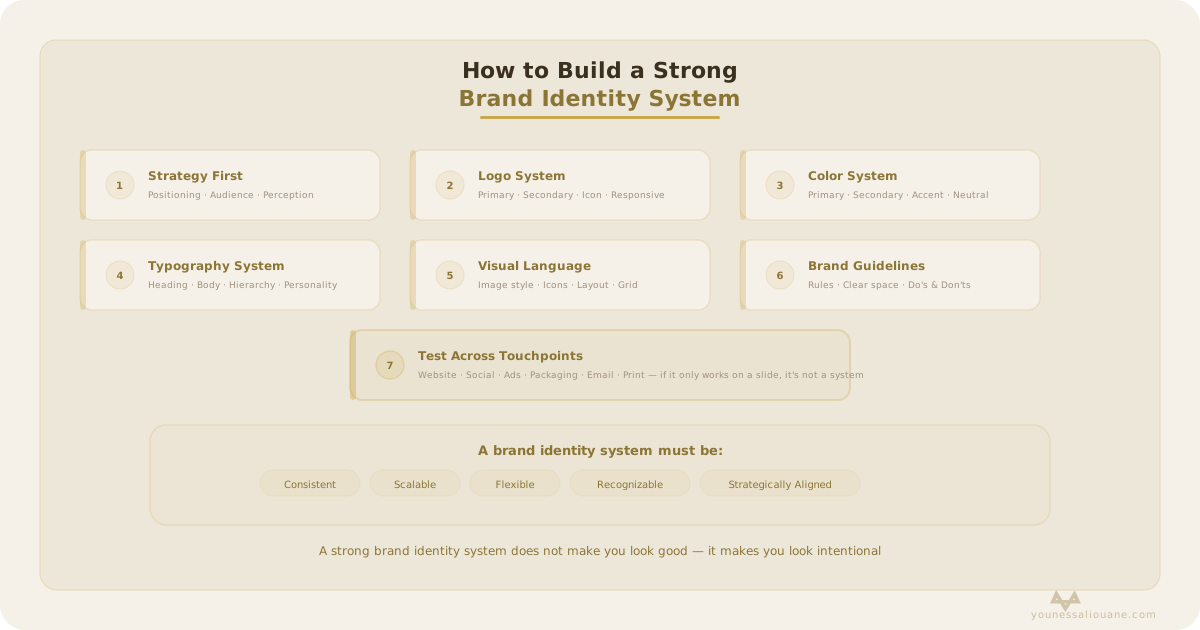
A logo is not a brand identity. A color palette is not a brand identity. Even a beautiful website is not a brand identity. A strong brand identity system is a structured visual and strategic framework that ensures consistency, clarity, and recognition across every touchpoint. Let's break down how to build it properly.
1. Start With Strategy — Not Design
Before opening Illustrator or Figma, you must define: Who is your target audience? What is your positioning? What problem do you solve? How do you want to be perceived? Without positioning, identity becomes decoration.
Apple does not just design minimal visuals randomly. Their identity reflects simplicity, premium positioning, and innovation. Design must reflect strategy.
2. Build a Complete Logo System
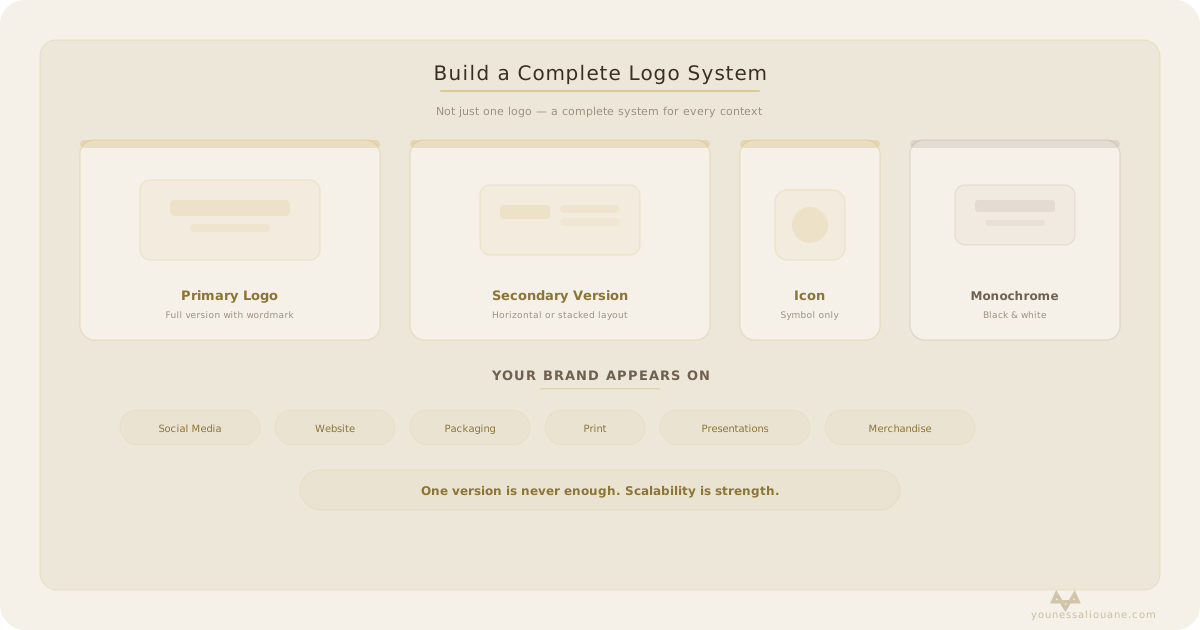
A strong brand identity includes a logo system, not a single mark. You need a primary logo, secondary version, icon/symbol, monochrome version, and responsive versions for small sizes. Your brand will appear on social media, website, packaging, print, presentations, and merchandise. One version is never enough. Scalability is strength.
3. Define a Strategic Color System
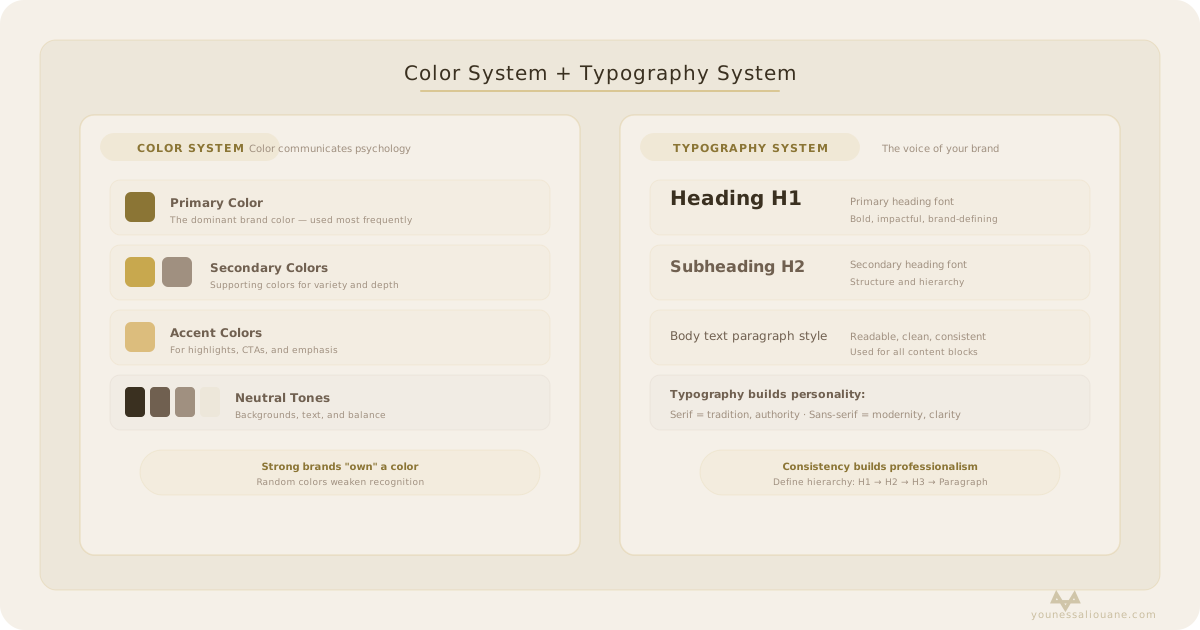
Color is not just aesthetic. It communicates psychology. Your identity should include a primary color, secondary colors, accent colors, and neutral tones. Strong brands often "own" a color. Think of Coca-Cola and red. A structured palette ensures visual consistency across platforms. Random colors weaken recognition.
4. Build a Typography System
Typography is the voice of your brand. A proper system defines heading font, subheading font, body text font, and optional accent font. It also defines hierarchy: H1, H2, H3, Paragraph. Serif conveys tradition and authority. Sans-serif conveys modernity and clarity. Consistency builds professionalism.
5. Define Visual Language & Style
This includes image style (dark, bright, minimal, dynamic), iconography style, illustration style, layout principles, and grid system. Nike uses dynamic photography and bold typography to communicate energy. Your visual language must align with positioning.
6. Create Brand Guidelines
A brand identity system is incomplete without documentation. Brand guidelines include logo usage rules, clear space rules, color codes (HEX, RGB, CMYK), typography rules, and do's and don'ts. Guidelines protect consistency. Without them, your brand becomes diluted over time.
7. Test Across Touchpoints
A strong identity must work on website, social media, ads, packaging, email, and print materials. If it only works on a presentation slide, it's not a system. A real identity is flexible and adaptable.
The Core Principle
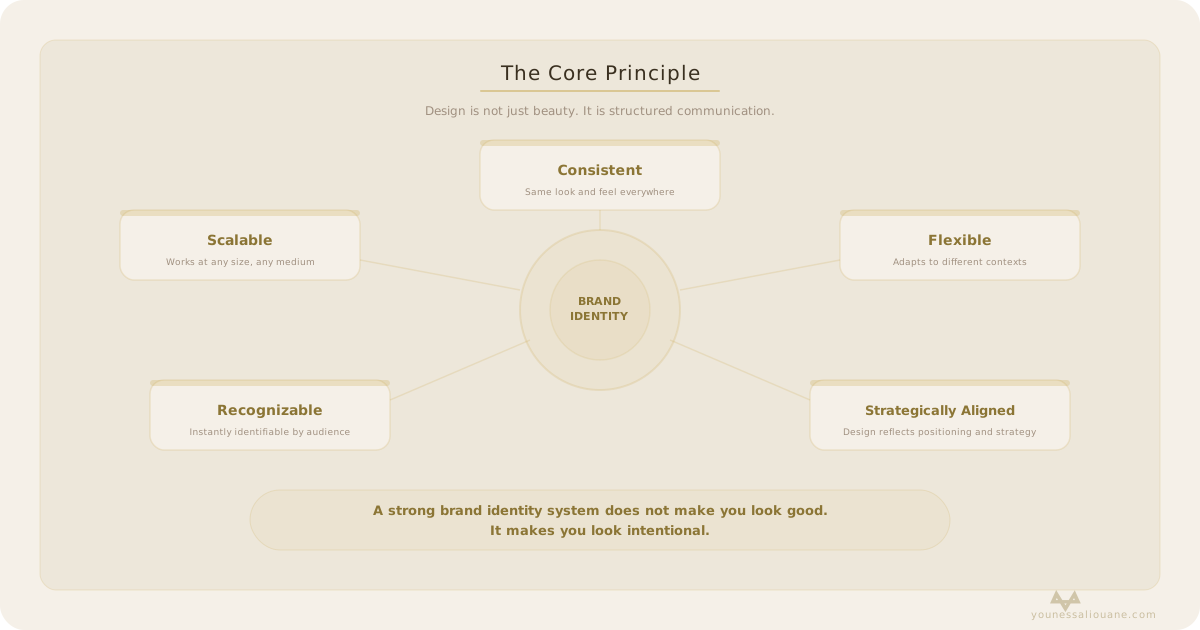
A brand identity system must be consistent, scalable, flexible, recognizable, and strategically aligned. Design is not just beauty. It is structured communication.
Final Thought
A strong brand identity system does not make you look good. It makes you look intentional. And in competitive markets, intentional brands win.
A strong brand identity system does not make you look good. It makes you look intentional. And in competitive markets, intentional brands win.
